

The Piano Effect
This movie forever changed how I saw men, and myself.

Riding in a car with a group of friends, two women and a man. We were in our early 20s, so really we were more like girls and boys. The boy was driving, and the three of us girls were crammed close in his small car. The radio was playing a new song, “Leaving Las Vegas” by Sheryl Crow. The girls already knew the chorus and were singing it loud loud loud. I pointed out that while Sheryl herself sings the chorus lyrics, there was a group of men in the background singing Oh oh oh. So if we wanted to be accurate, we needed the only boy in our group to back us up.
The boy waited a minute, gathering his thoughts. For context, this boy was kind, friendly, and chill, and mostly didn’t hit on us, which meant something. But what he said when I asked him to sing with us was so shocking that it’s still burned in my brain. With a snort of contempt he replied, I’d rather chop off my own dick than be a backup singer in a girl’s band!
We fell silent, and stayed that way. My stomach churned with revolting disgust at the boy’s words, as if I were suddenly sitting in a steaming pile of shit. The boy shuddered, as if to shake off the moment. His hands were on the steering wheel, controlling our safety, and I suddenly felt unsafe. I felt the dark and tangled roots of his sexism choking the life out of me, and I never hung out with him again.
The rise of women on the radio was wildly exciting, especially after years of atonal male Grunge singers who had dominated the industry for years. But it came with a price. As women’s voices rose and eclipsed those of all-male Grunge bands, a lot of men got cranky, and by that I mean contemptuous and disdainful, and also jealous and seething with envy. I was a young musician trying to start my career during the end of the Grunge era in Seattle, and experiencing that sexism firsthand was brutal. (I previously wrote about that in this essay for Oldster Magazine.)
I needed an antidote, and that same year I found it in a movie that you already know.
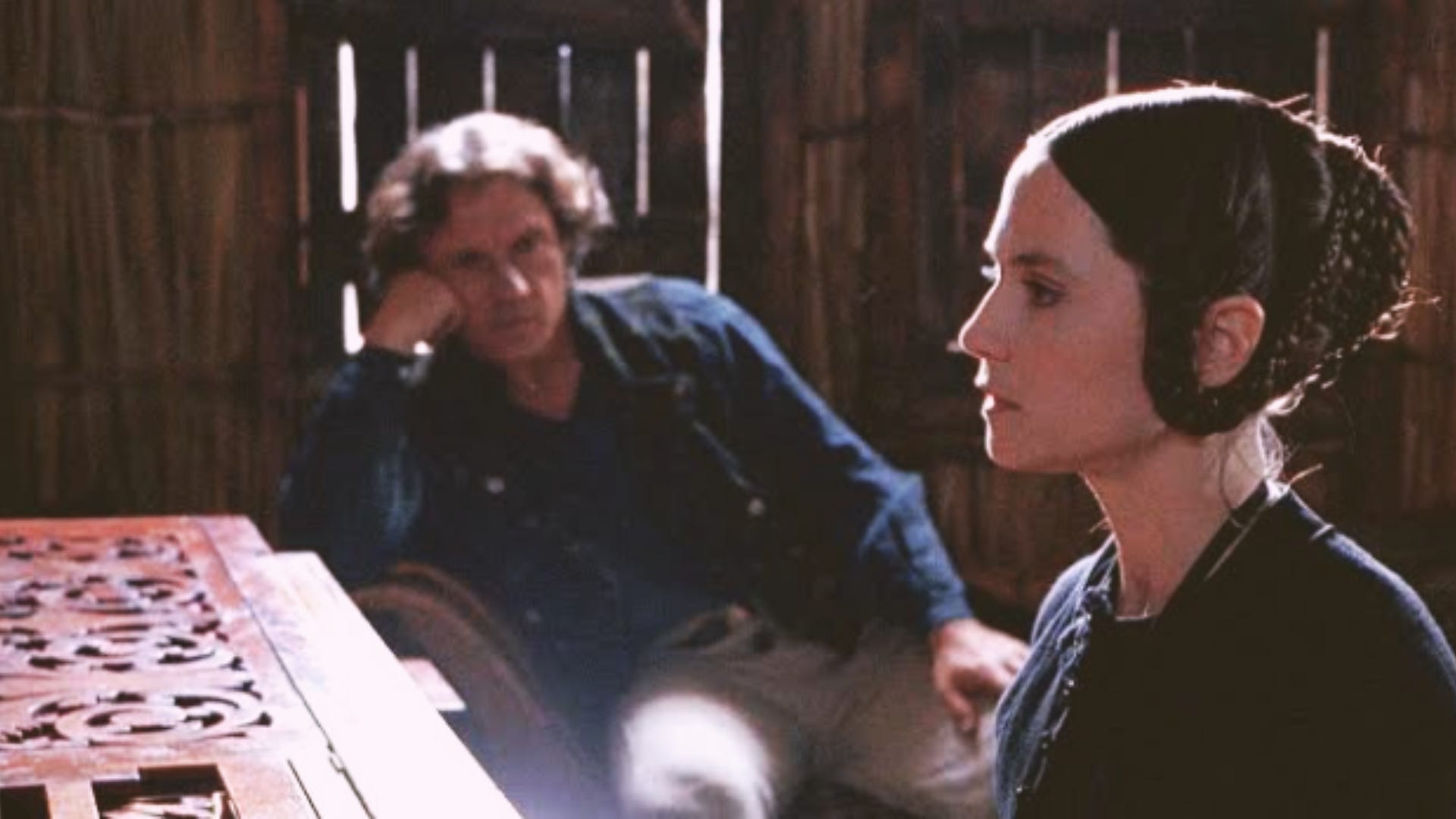
Jane Campion’s “The Piano” instantly struck me as a miracle, though I couldn’t quite understand exactly why that was so. In retrospect I think it was the first movie I’d ever seen that featured a distinctly female gaze. Its sensual beauty, its unique and inclusive casting, and its celebration of female desire as a force for good had a powerful effect on me. I think I watched it 5 or 6 times in the theater, finding new things to love with each viewing.
I found it particularly compelling that the adult lead, a Scottish woman played by Holly Hunter, was mute. No clear explanation is given for her muteness, but her daughter normalizes it for everyone around them as they travel through the rough but gorgeous wilds of their New Zealand island. You may recall that they land on that beach due to an arranged marriage with a local settler, played by Sam Neil, a gruff man who doesn’t see a need to rescue the woman’s piano from the boggy beach.
But the piano is vital to her self-expression. Playing music is her source of joy, her spirituality, her gift to the world, and she can’t be without it. She enlists a neighbor named George, played by Harvey Keitel, for help. They tromp back to the beach for a piano rescue, and as he watches her playing he is deeply enchanted by the transformation that comes over her. There begins the love triangle that forms the spine of the story.
She and George start a secret affair that is sexy and loving. He doesn’t try to get her to speak. He accepts her the way she is, and feels lucky for being with her. His support and acceptance of her has a powerful effect. She goes through an enormous transformation that eventually surfaces, literally and figuratively, surprising herself and everyone around her.
By the end of the story she has jettisoned the husband, and she and her daughter are now living with George. Secure and immersed in her new life she is finally, at her own pace, learning to speak.
This example of male support and encouragement kept me going through some hard shit. I was learning how to be a feminist who loved men and wanted to have them in my life. Collecting examples of good men, men who respected and encouraged women’s voices, was essential to the development of my Power Voice. Along the way I chose men wisely, and you know how I know? Most of them are still in my life. My voice feels relaxed and happy when I talk to them, just as it did all those years ago.
This week’s Power Voice journal prompt:
What are some examples of good men, men who supported women’s voices, in the movies and media that you loved when you were young? How exactly did they do it? (EX: “Nobody puts Baby in a corner!”)
List the men in your life who had “The Piano Effect” on you. Which ones actively encouraged your voice, and how did they do it?
If there are young men in your life, how can you encourage them to support women’s voices? What are some examples from your own experience that you can offer to them?